

Wickford, unlike Newport, its sister city across the bay, escaped the Revolutionary War largely unscathed. Indeed, during the war, it became a haven for prominent Newport citizens’ intent on escaping the British occupation of their seaport town. After the War development in Wickford, as in the rest of the region, was slow, but by the 1790’s a resurgence of the coastal and West Indies trade and a rapid expansion of fishing in the region fueled a period of growth as a port and shipbuilding center. Additionally numerous taverns, shops, and support service businesses were established in the village as a result of its prominence as a trading center; second only during this period to Newport.
During this timeframe, the village also became the cultural, economic, social, religious, and civic center of not only North Kingstown, but much of southern RI as well. A number of churches, banks, meeting halls, and governmental buildings were established here during the 19th century.
In 1800, the Washington Academy was founded here as a school to train young men as educators to satisfy the burgeoning demand for public education. This institution was created by leaders of not only North Kingstown, but Providence and Newport as well. Its first president was Samuel Elam a prominent New York and Newport businessman who kept a summer estate here in North Kingstown near the small mill village of Annaquatucket.
A slow period of general decline in the village abated in 1870 by the construction of the Newport & Wickford Railway and Steamship Line, funded largely by wealthy Newport patrons looking for a way to avoid the long trek up through Providence and Bristol to get to theis summer mansions in the "City By the Sea." This train left Wickford Junction, just west of Lafayette, on a regular basis which tended to mirror the mainline train schedules, and made the short run down to Poplar Point where a waiting steamer could take travelers directly to Jamestown and Newport. This influx of new money, jobs, and visitors revitalized the village at a critical juncture in its history, as many of the old colonial-era homes were falling into disrepair by that time.
Additionally the construction of the Sea View Trolley Line some two decades later, funded largely by wealthy Narragansett casino owners intent on providing a easy way to bring Rhode Islanders to their resorts and beaches, continued the revitalization initiated by the Newport Line.
The next phase of the village's history is marked by two events which occurred one after another. First, the great Hurricane of 1938, wreaked havoc on the village and ruined its resident's wells thereby initiating the construction of a municipal water system. Second, the rapid paced construction of the military complex at Quonset/Davisville caused an influx of residents, both for construction and then base staffing purposes, which overwhelmed the local housing stock and brought about the carving up of many of the villages larger homes into apartments to handle the added people.
Wickford has survived largely intact due to these unique circumstances and as a result of the groundbreaking use of comprehensive historic zoning pioneered by local residents united as The Main Street Association in the 1930's.
Text provided by Tim Cranston, Swamptown Enterprises
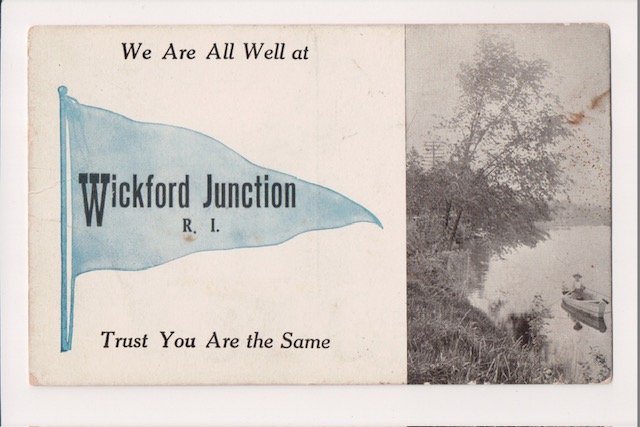
We Are All Well at Wickford Junction RI Trust You Are the Same
Wish This Were U and I in Wickford Can't You Come
All the Folks in Wickford Send Sincerest Greetings
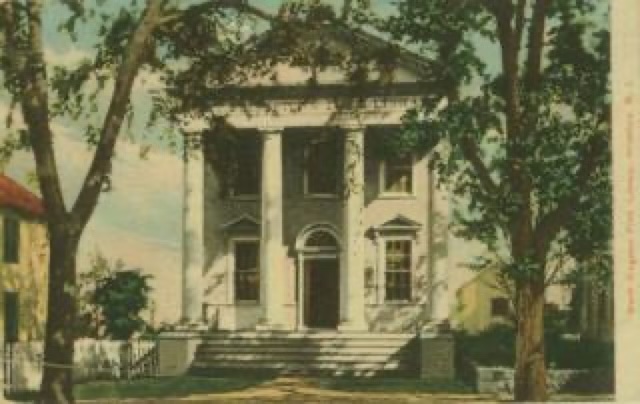
This is a historic picture of the old North Kingstown Free Library in Wickford, RI. This Greek Revival building served as the town's library until 1975. The building on Brown Street in Wickford opened in 1899 as the community’s library. Local businessman Caleb Allen Chadsey (1822–1894), a former whaler who participated in the 1849 Gold Rush, bequeathed the land and $10,000 to the town to establish a free public library.
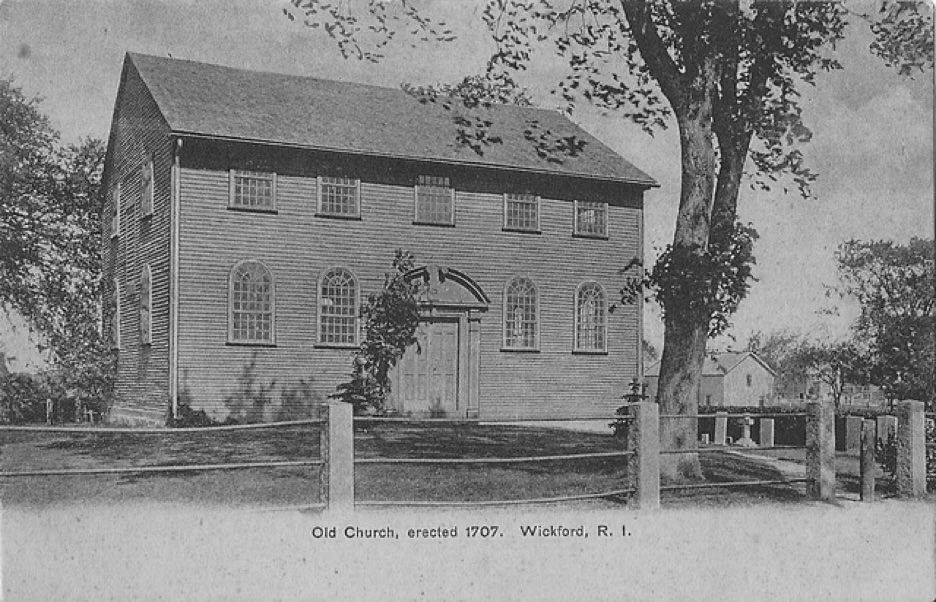
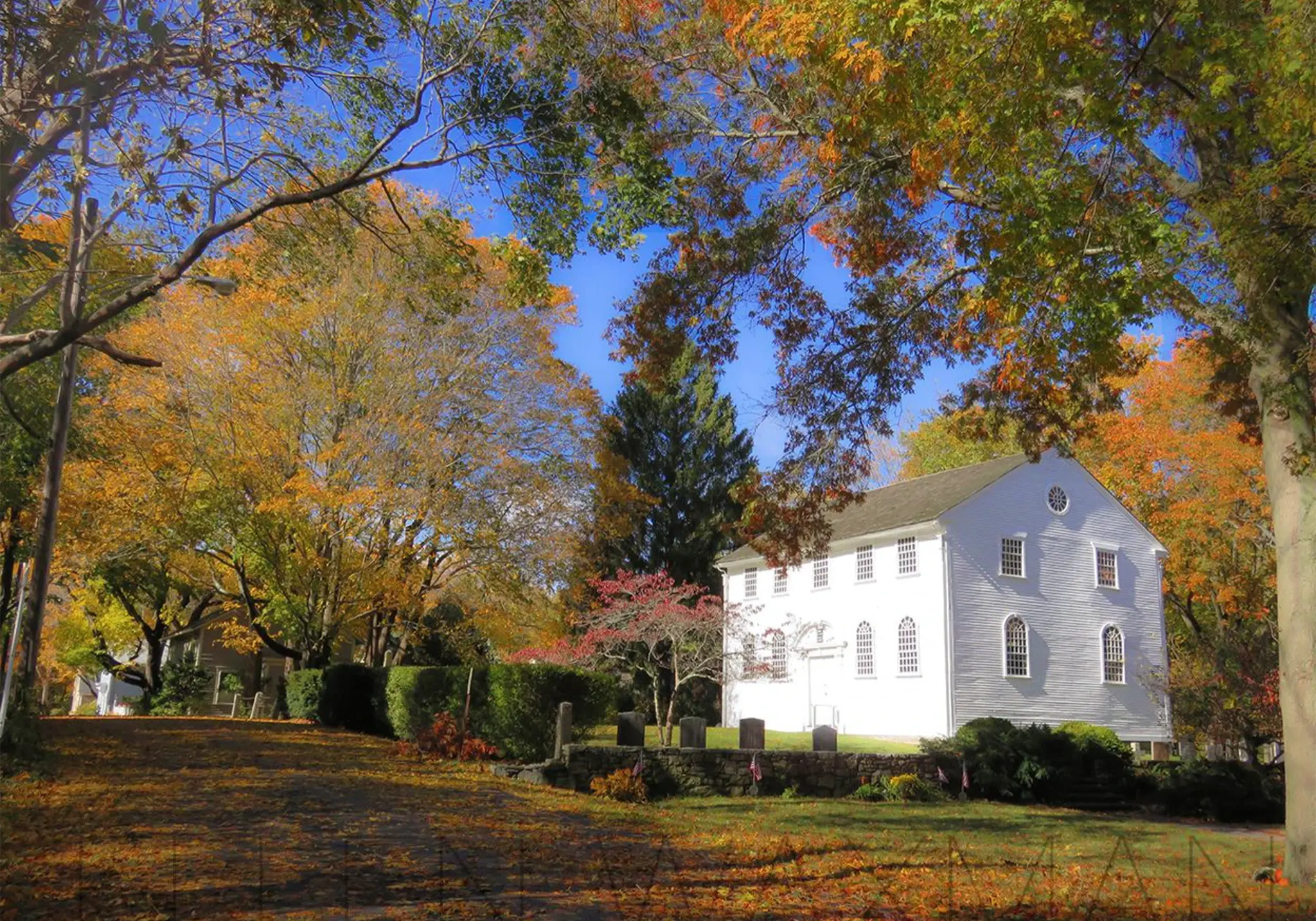
This is a picture from the historic village of Wickford, Rhode Island. Old Narragansett Church is a historic Episcopal church in Wickford, believed to be the oldest Episcopal church building in the Northeastern United States. The building was constructed in 1707, about five miles southwest of Wickford. In 1800 the church was disassembled and moved to its current location.
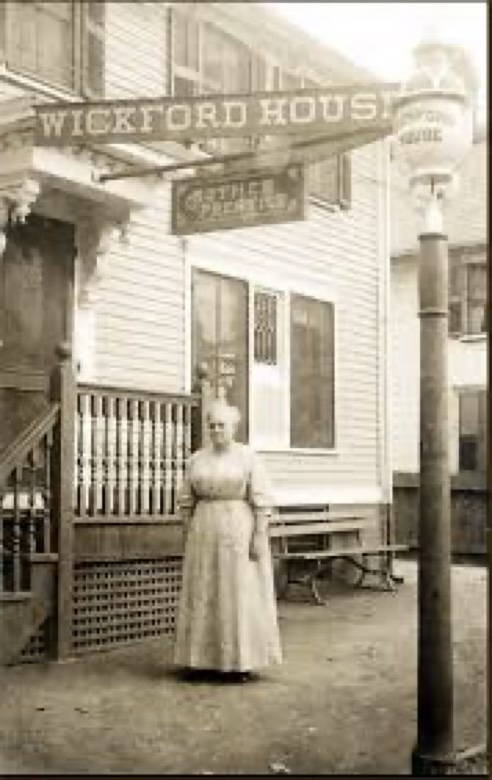
This is a picture from the historic village of Wickford. It is a picture of the “Wickford House” with Mother Prentice standing out front.
This structure was built in 1769 by Captain Alexander Huling III. The boarding house passed through several owners before George Prentice and his wife, Ellen, bought the house in 1872. Ellen developed her reputation as a very good cook, whose food was exceptional and contributed to the great success of their business. It would go on to achieve national renown, primarily for Ellen’s skills as a cook, baker, and hostess. It stayed in business through World War I. She was known as Mother Prentice.
Explore Other Villages
Get Involved
Support the preservation of North Kingstown’s history.