

Explore the everyday objects that shaped life in our community. From tools of trade to household essentials, each artifact in this collection tells a story about the people who lived and worked here. Browse the items below to discover the ingenuity, craftsmanship, and history preserved in North Kingstown's past.
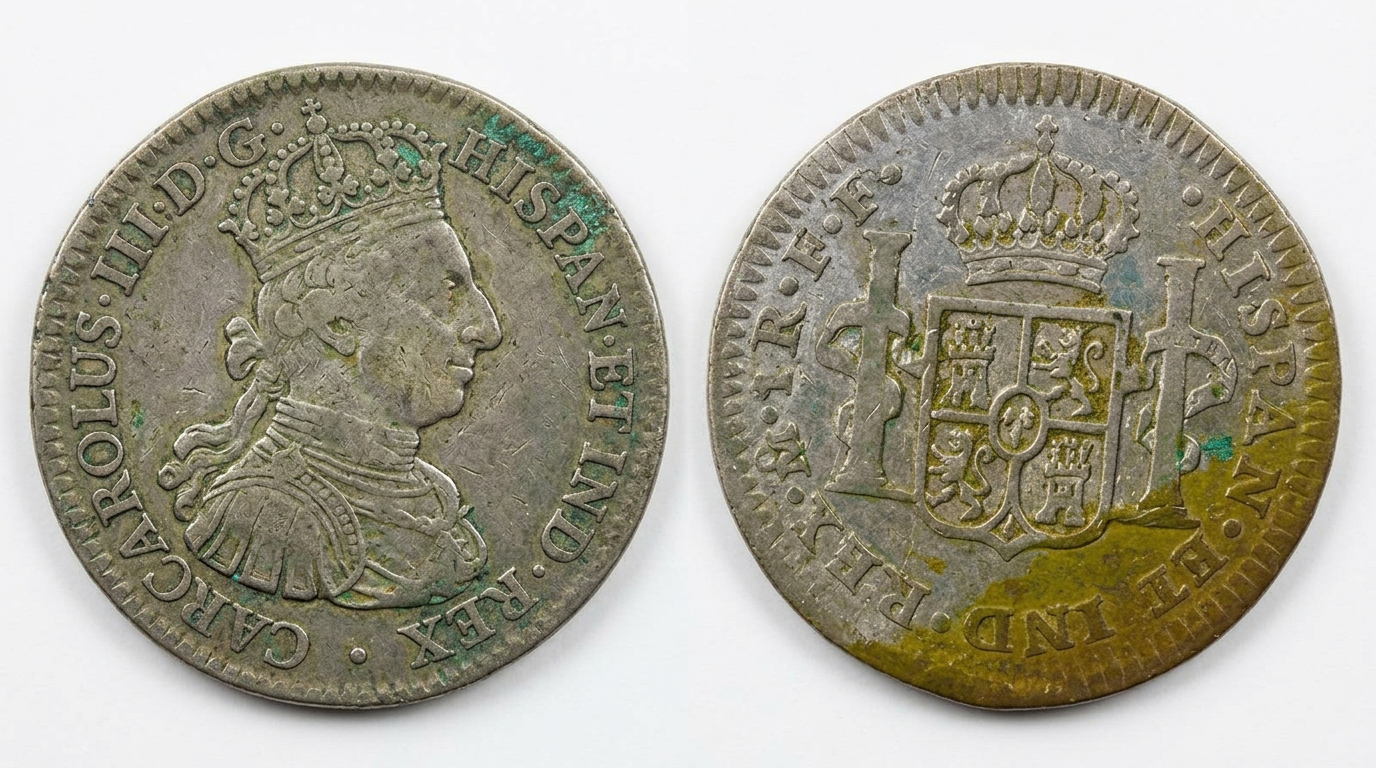
1782 King Charles III one Real coin.Minted in Mexico City.Also, metal arrowhead was found nearby.
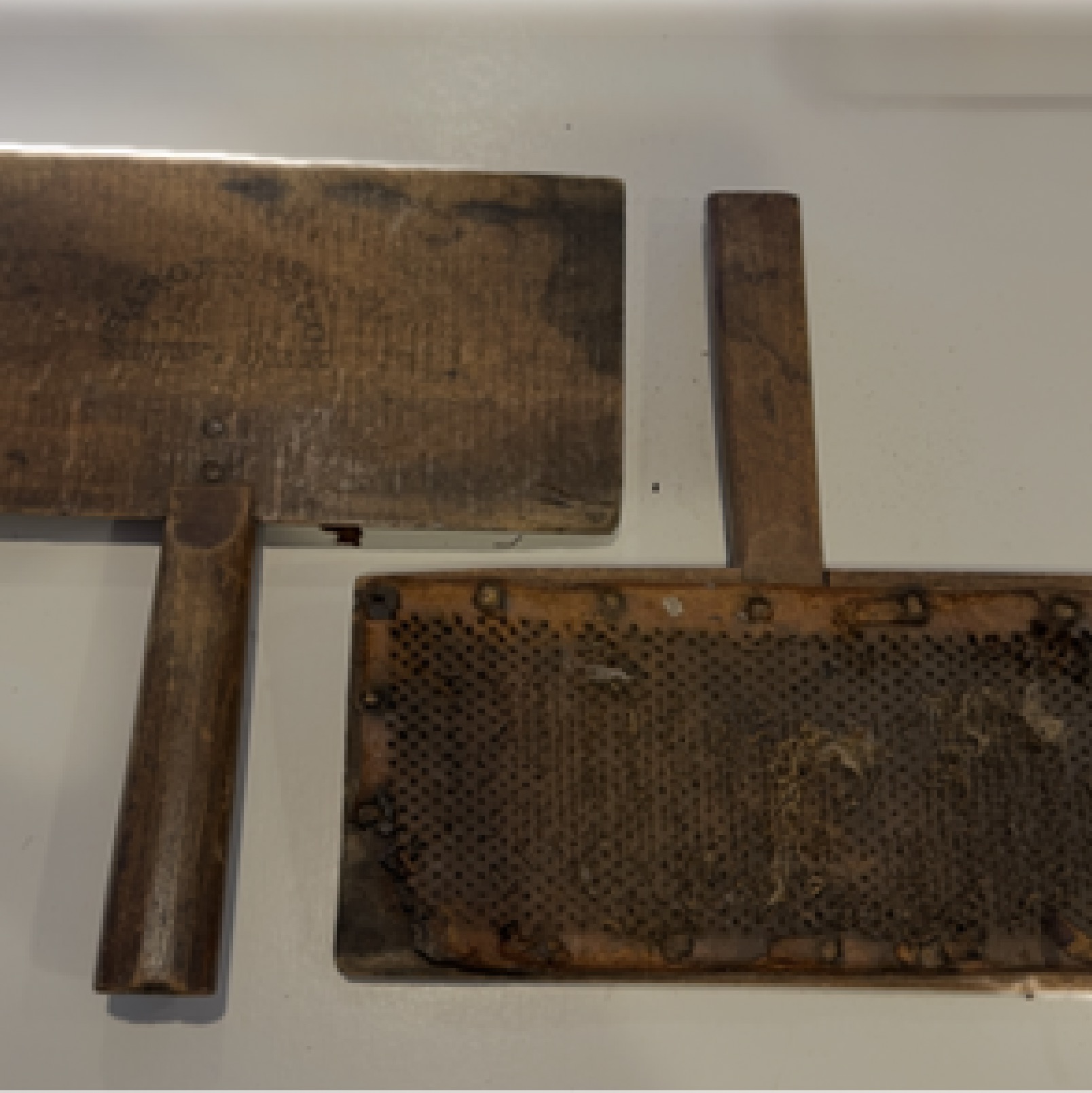
Wool Carders (Pair)
Accession No: 2504 0010SC and 2504 0011SC
Location: Rhode Island Date: Circa 1864–1900
Dimensions: 8” length (to handle tip) x 8” width
Material: Wood with metal tines
Description: These hand tools were used in pairs to brush raw wool, untangling the fibers to prepare them for spinning into yarn. By pulling the wool between the metal tines, the user created soft rolls ready for a spinning wheel. These carders were made by Sargent & Co. of New York, a major manufacturer that provided standardized tools for home textile production across 19th-century America.
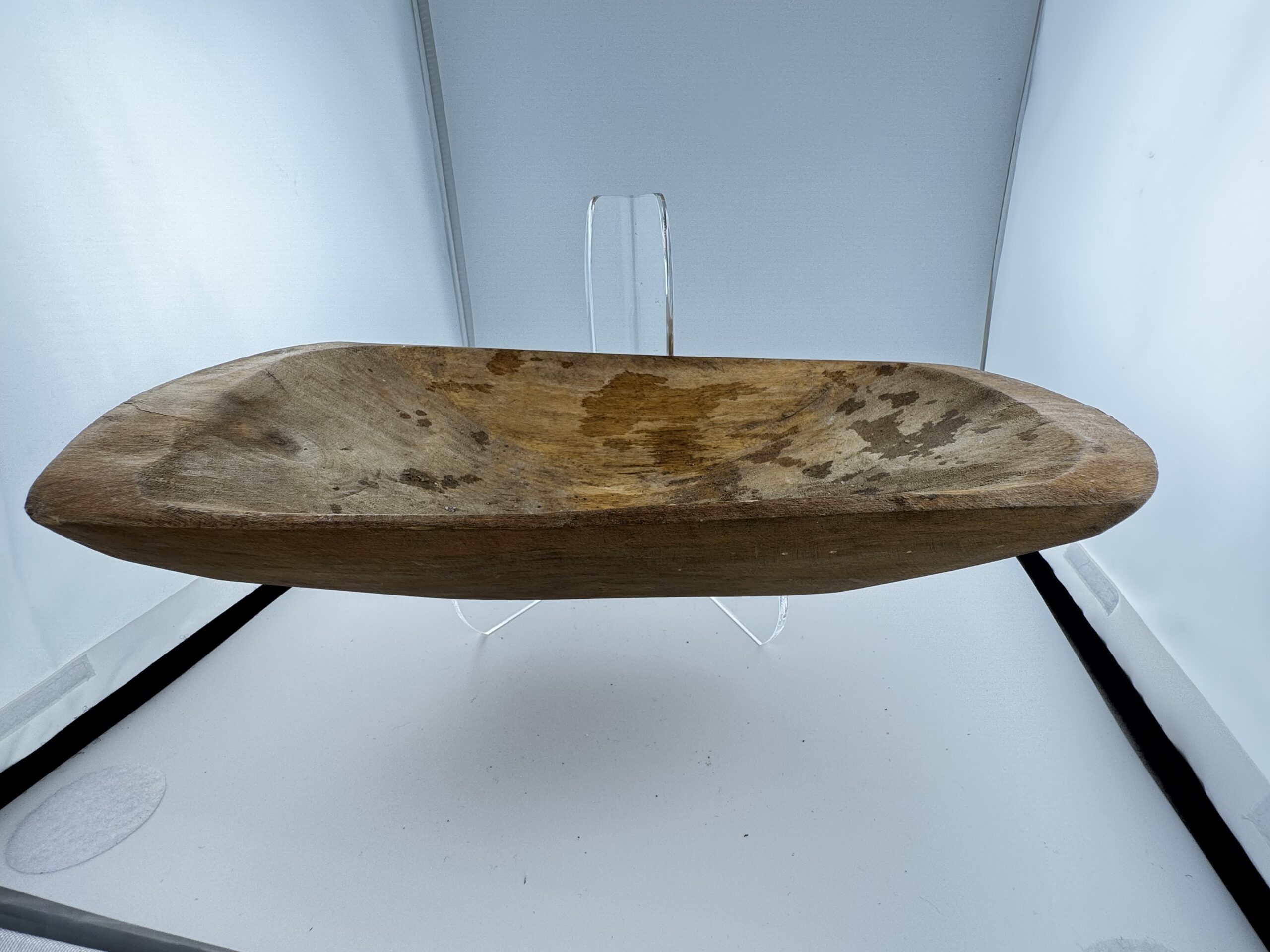
Wooden Trench Bowl
Accession No: 2504 0015SC
Location: Rhode Island Date: 18th–19th Century
Dimensions: 14” length x 6.5” width x 3.5” depth
Material: Hand-carved wood
Description: Commonly known as a "trencher" or dough bowl, this versatile vessel was a staple in early American kitchens. Carved from a single block of wood, its elongated shape was ideal for mixing and kneading bread dough or serving food. This specific piece shows significant signs of wear from years of use, reflecting its history as a hardworking domestic object likely hand-hewn by a local craftsman.
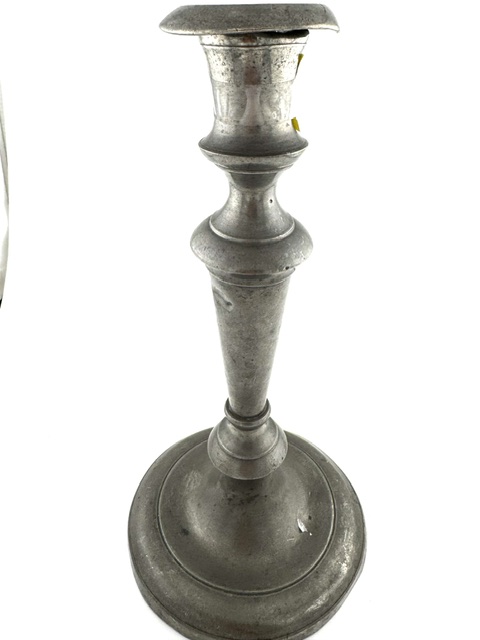
Pewter Candlestick
Accession No: 2504 0009 SC
Location: Rhode Island Date: Early New England
Dimensions: 9.5 inches height x 4.5 inches width at base
Material: Pewter
Description: This elegant candlestick features a classic graduated design, with the stem composed of tiered, rounded sections that taper toward the top. Popular in early New England homes, pewter was often called "poor man’s silver" because it offered a similar metallic luster at a more affordable price. The wide base provided stability, while the height helped cast light across a room. This particular piece is unsigned, which was common for locally produced utilitarian wares of the period.
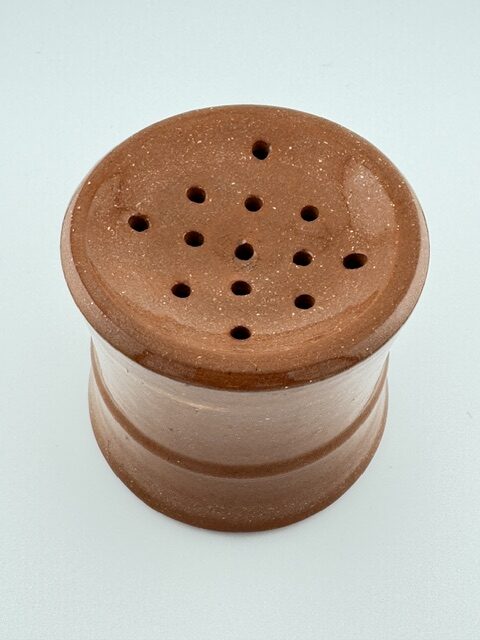
Redware Sand Shaker
Accession No: 2504 0004SC
Location: Rhode Island Date: 1750–1850
Dimensions: 3 inches height x 2.75 inches diameter
Material: Red earthenware clay with lead glaze
Description: Before modern blotters, writers used this shaker to sprinkle fine powder or "sand" over wet ink to dry it quickly and prevent smearing. This redware piece features a concave top with small holes for easy pouring and reuse. The surface is mostly smooth, though faint speckles of original sand remain on the top. While the upper body is finished with a protective glaze, the bottom remains unglazed, revealing the natural texture of the red clay.
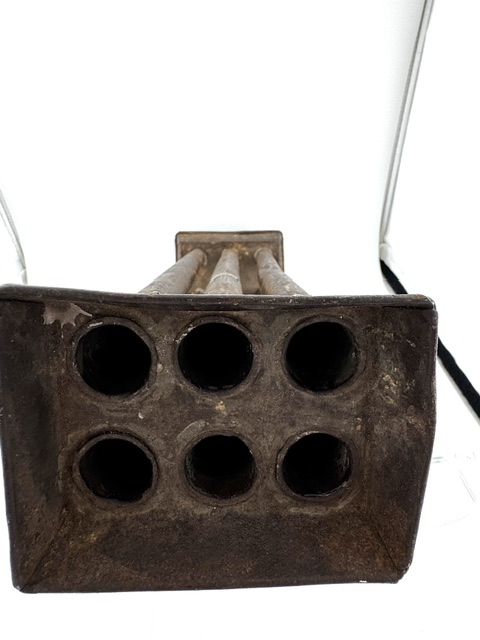
Six-Tube Candle Mold
Accession No: 2504 0007SC
Location: Rhode Island Date:
Dimensions: Designed for 10” candles
Material: Dark metal
Description: This domestic tool was used for casting six candles simultaneously, a significant improvement over the time-consuming method of hand-dipping. Molten wax or tallow was poured into the tubes, which held the wicks in place until the candles cooled and hardened. This piece is in fair condition and features a dark aged patina, characteristic of early New England household equipment. Molds like this were essential for providing light in colonial and early American homes.
24-Tube Candle Mold
Accession No: 2504 0005SC
Location: Rhode Island
Date:
Dimensions: 11” height x 7” width x 9” length
Material: Tin
Description:
This large-scale domestic tool was used for casting twenty-four candles at once, reflecting the high lighting needs of a large household or a small local business. Molten wax or tallow was poured into the individual tubes to form uniform candles around suspended wicks. This piece is in fair condition and shows clear signs of use, illustrating the labor-intensive process of providing light in early New England.
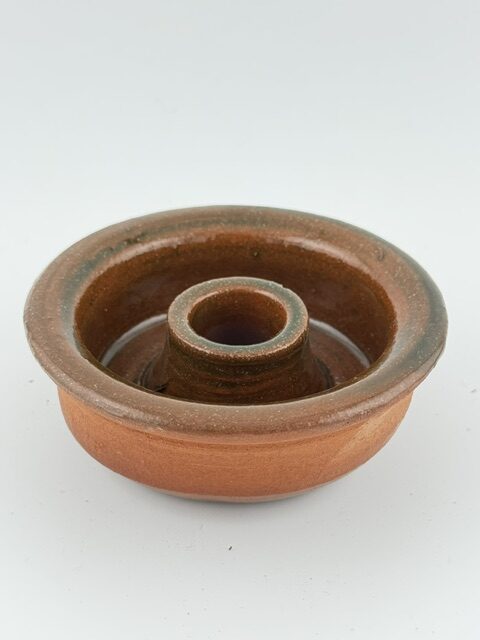
Redware Candle Holder
Accession No: 2504 0006SC
Location: Rhode Island Date: 1750–1850
Dimensions: 1” height x 3” diameter
Material: Red earthenware clay with lead glaze
Description:
This single candle holder is a classic example of early American utilitarian pottery. Crafted from local iron-rich clay, it features a dished base designed to catch dripping wax and a central socket to hold a single candle. The piece is finished with a traditional glaze and remains in near-perfect condition, showcasing the simple but effective craftsmanship used in Rhode Island households for everyday lighting.
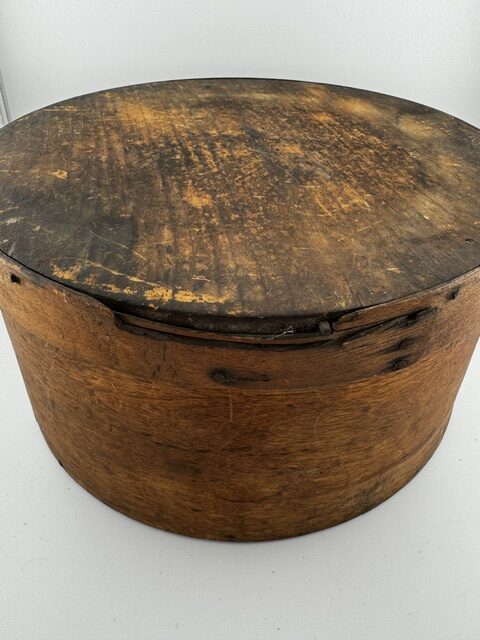
Bentwood Round Box
Accession No: 2504 0008SC
Location: Rhode Island Date:Dimensions: 1” height x 3” diameter
Material: Local hardwoodDescription:
This small storage container is made using the bentwood technique, where thin strips of wood are steamed or soaked until pliable enough to be curved into a circular shape. Commonly used in New England for holding small household items or sewing notions, this piece is in fair condition. It features a personal touch with the faint initials "LB" inscribed on the surface, suggesting its use as a private or labeled storage box by a former owner.
Fruit Juice Press
Accession No: 2504 0013SC
Location: Rhode Island Date: Late 19th CenturyDimensions: 11” length x 2” height
Material: WoodDescription:
This simple hand-operated kitchen tool was designed to extract juice from small fruits. It features a wooden top that lowers to press fruit against a built-in strainer containing seven holes. This mechanical design allowed for efficient juicing while keeping seeds and pulp separate. Such wooden presses were common in early American kitchens, typically dating to the late 1800s, when they were crafted from durable hardwoods to withstand the pressure of seasonal fruit processing.
Hand-Blown Cobalt Glass Bottle
Accession No: 2504-0012SC
Location: Rhode Island Date: 19th CenturyDimensions: 9” H x 7.5” D
Material: Cobalt glass [1]Description:
This striking cobalt blue bottle with its generous 7.5-inch diameter suggests use as a household decanter or storage for spirits. In the early 19th century, cobalt blue glass was considered a luxury item. The deep color and the pontil scar on the base, which shows it was mouth blown, attest to the sophisticated skills of this anonymous 19th century artisan.
Get Involved
Support the preservation of North Kingstown’s history.